Tuesday, October 2, 2012

Happy Early Birthday,Katy Manning!
                            In writing this it just rather occurred to me that this is the first birthday blog I've done for one of the people to portray a Doctor Who companion. But this is a very special one for me anyway. Having said goodbye to Caroline John earlier this year I actually realized with the passing of her,Elizabeth Sladen and Nicholas Courtney all within a years time (not to mention Jon Pertwee's passing in 1996) that Katy Manning is one of the last survivors of the third doctor era of Doctor Who. Her brash,in your face personality and general good nature have certainly given her a shot in the arm in terms of being not only a spokeswoman for her era of Doctor Who but for the accompanying Children In Need charity as well. Here's a little more about her and my reflections on the character she bought to life:the third doctors second and often misunderstood companion Josephine "Jo" Grant.

                        The daughter of a sports columnist,Katy attempted an American acting career through MGM following a year long recuperation from a car accident she was involved in at age 16. Perhaps this made her closer than others to injured and afflicted youth.  After a five year stint at MGM Katy returned to England to study at the  Webber Douglas Academy Of Dramatic Arts.  That was followed by a three year stints with the Wolverhampton repertory company. She joined the cast of Doctor Who in 1971 as a replacement for Caroline John. She along with Courtney (as the Brigadier) John Levene (a Sgt. Benton) and Richard Franklin (as Mike Yates) are often known as the UNIT family,the core part of the doctors task force on Earth. Known for her occasionally clumsiness on set due to her poor eyesight,she became close to the cast as she continued. In particular with Jon Pertwee. This led to a similar interaction between the doctor and her character Jo Grant.

                  Though Katy Manning herself didn't consider feminism a particularly important element for her character to contend with,as would be the case with Elizabeth Sladen's Sarah Jane Smith,Jo Grant is often written off as a companion who seemed to exist primarily to be at every villains mercy and therefore always in need to be rescued by the doctor. What I notice about the character is a certain similarity to another unlucky fictional character: Charlie Brown. Though Jo is often viewed as a one dimensional character,Katy's terrific performance in the role helped me to realize that Jo Grant's character was all about developing a strong reputation. Even when your considered bad luck by some people. She probably had the most personal growth of any Who companion up to that point as a result. So happy 66'th Katy on the 15'th of this month! Hope,as with many Whovians out there,that you have fun!


One of my favorite Katy Manning moments caught on tape:


Sunday, September 30, 2012

Doctor Who-Planet Of Giants
                                      Considering the hectic scheduling,poor studio facilities and non existent budget early Doctor Who producers such as Varity Lambert and Sydney Newman had their work cut out for them in terms of making Doctor Who effective for it's purpose at the time. Sometimes scripts written at one point would be used later,or even not at all. Such as was the case with this serial. Originally conceived of as the episodes following 'An Unearthly Child',this was originally written as a four part serial but due to the chaotic production of the period was whittled down to a three part serial instead. Because it had such a compelling plot line,it was going to be one of those stories that would rely heavier on the ingenuity of the actors and writers to bring the story to life.

                            Following a malfunction in the TARDIS's materialization circuits the Doctor,Ian,Barbara and Susan find themselves shrunken to just under an inch high and being menaced by a world of giant Earthworms,insects and a cat. After the realization that the insects they're seeing are dead,and Ian's discovery of a giant (to him) murdered man it's made apparent what's going on around them: a scientist has been murdered by economically motivated chemists who have been developing an insecticide that,if unleashed could wipe out all life on Earth.


                       Following Barbara's exposure to the insecticide,the TARDIS crew attempt to phone the authorities but again their altered physical parameters get in the way. They are however successful in starting a small fire,at which time the odd high frequency phone call originally delivered by the shrunken Doctor has the authorities are alerted of the suspicious activities and arrest the men responsible for the murder while the Doctor manages to re-create the evens that shrunk them,thereby returning the TARDIS and it's crew to their proper size and Barbara back to health.

                       For it's time,this was a very compact and effective serial for Doctor Who. The effects,including seemingly huge match boxes,drain pipes and drain plug chains in proportion to the actors are extremely well done for their time and budget. There's also an early in the game environmental message as well,concerning a group of money hungry profiteers looking to benefit from the potentially dangerous insecticide that has dangerous side effects on all living beings. The sudden view of life from the perspective of being smaller helps the TARDIS crew to view this wrong against humanity from a different perspective. This is actually one of my favorite first doctor stories and I feel it's a highlight for the entire classic series as well.


Friday, September 28, 2012

Doctor Who-The Krotons
                          Season 6 of Doctor Who came during a very interesting time in terms of society. As seen with 'The Dominators" earlier in the season the show was ripe for serials that made very pointed commentary on society as the many events of the late 60's unfolded it around it. There was also a need within the program itself to develop a new group of villains,since there were some at this particular time who felt the Daleks and the Cybermen would need to be replaced as the decade drew to a close. Of course these would remain staples of Doctor Who that continue to this very day. On the other hand that didn't stop the producers of the show from making the attempt to create new adversaries to keep the doctor and his companions in check and contending with their own mission in different ways. This one such attempt created another excellent atmosphere for commentary on contemporary society as well.

                  After landing on what appears to be a dead planet the Doctor,Jamie and Zoe encounter a structure where a disoriented man is vaporized right before their eyes. Continuing to investigate further,they meet up with a group of people living underground called the Gonds. They are required,in exchange for intellectual knowledge to send their best and brightest students to the Krotons,after which they are never seen again. The doctor,putting two and two together,is able to save one such student Vana from the poison gas. Her insights upon regaining consciousness enable Zoe and the doctor to take the test required to enter the Krotons spaceship called the Dynatrope. After surviving,along with Jamie later,the effects of the Krotons mind control techniques they learn that they are part of a battle fleet crash landed their who have been using the the mental energy of the Gonds for generations to build up their energy supply,to the point of destruction of their world.  The doctor turns the tables on the Krotons amid the divided Gonds and,after destroying the Krotons and the Dynatrope,free the Gonds from their enslavement.

              Very much parallelling the issues of totalitarian regimes on Earth and human beings dependence on different religions,this is very much a story about thinking for oneself. The Gonds are portrayed as a divided society,the leaders open to the awareness the Krotons have enslaved their race through fear but many others seeing force as the only means of resistance. The promise of knowledge has kept them from having any curiosity as to the true motives of the Krotons. For their part,the Krotons are living machines that are dependant on human knowledge,but do not have any emotional attachments whatsoever and therefore view humanoid biology as completely meaningless. Hence have no difficulty in killing their humanoid "specimens". Again of course,we see this all the time in groups of people blindly following religions and economic systems,even killing for them without realizing they themselves may have become victims of a bullying despotism. This is an example of science fiction being an excellent filter for issues often too difficult to deal with in our reality.

Thursday, September 27, 2012

Doctor Who-The Dominators
              During the late 1960's both America and England were caught up in a great deal of peace demonstrations,focused primarily on the war in Vietnam. This was beginning to effect the way many people were viewing the issues of national defense around the world. Along with that more politically driven movement there was a growing pacifist movement that called itself the Counterculture. On both sides of the pond,this led to a great deal of censorship on radio and television. Songs sung about this issues were carefully examined for subversive content. And on TV,the issues of war and peace were often best addressed in one way only:under the guise of science fiction. Star Trek were doing that in the US with the attitude of "It's happening on another planet so it's okay to talk about it". And while these sorts of ideas had always been explored in Doctor Who,this particular serial faced the issue had on.

           The TARDIS arrives on the planet Dulkis seeking a brief holiday but finding themselves on what turns out to be a former atomic test sight of the now pacifist Dulcian race. But Director Senex and the rest of the ruling council refuse to admit the Director's son Cully's claim that a group of robots have invaded the test island. When the doctor arrives with Jamie and Zoe,they not only confirm what Cully has been saying but that all the radiation from the test island has disappeared. While the Dulcians negotiate,the TARDIS crew goes to investigate,only to find themselves captured by the sadistic Dominators,who use radioactive materials in a storage container to supply the energy for their ships. After their escape the Dominators had  successfully captured the Dulcian council,along with Zoe and Cully as slave labor to build a drill which they plan to use to turn Dulkis into a massive radioactive lava bed to supply their ships. Upon escape it ends up being the job of Jamie,Cully and the Doctor to stop the rockets the Dominators are using in their mission. And in the end,their own weapons are used to destroy their ship and turn a planetary catastrophe into a mere volcanic eruption.

          Although there are elements to this story that,by today's standards,would be considered politically incorrect in terms of the viewpoint of defensive measures,one point is made clear. It is not the idea of pacifism that keeps the Dulcians from being able to defend themselves against the heartless and murderous Dominators. It's the fact that they consider the only true defense to be endless verbal debate and negotiations between each other. While inherently a peaceful person like the other Dominators,Cully is on the side of the TARDIS crew in terms of the best offence being a good defense. It's a little surprising though to see the Doctors delight in assembling a homemade bomb to fight the Dominators. And even the usually logical Zoe to convince the slave laboring Dulciens that the only way out of their situation is to fight. But this represents in a way real life societies struggle during the post World War II generations of what true patriotism was,and in terms of defense what was the proper stand to take. Actually mixing that up with a very real commentary on nuclear weapons testing makes this a compelling and even mildly controversial serial.

Monday, September 24, 2012

Doctor Who-Enlightenment
                 In this final chapter of this fifth doctor trilogy,the TARDIS is almost diminished of energy after an urgent message is sent to the doctor from the White Guardian which he must attend to. Upon arriving at their appointed destinations the doctor and Turlough find themselves aboard a mysterious Edwardian period Earth sailing ship. Or so it seems. Mingling with the crew reveals they know nothing of where they are. Upon seeing a man outside the TARDIS,Tegan leaves to investigate to be discovered by the man calling himself Mariner,who takes her to a dinner meeting between the doctor,Turlough and the ships captain Striker who,for his part has intimate knowledge of the doctor. As it turns out,these ships are advanced space vessels disguised as ancient sailing ships. It's main crew are in fact Eternals,immortal beings on a ship race whose prize is Enlightenment,an unspoken source of all knowledge.

               Having plucked unwitting crews from different sources all over time and space,the Eternals are finding many of the ships in the race are being mysteriously destroyed. While investigating outside with the doctor and Tegan Turlough,no longer able to cope with the pressure put upon him by the Black Guardian goes overboard and is captured by the ambitious Captain Wrack. He is able to deduce out that Wrack has been tapping into the power of the Black Guardian Turlough has been resisting. While attending a part of Eternals on her vessel Wrack uses Tegan as an  unwitting host to an amplifier she was attempting to use to destroy all the other ships in the race. The doctor discovers this,destroys the amplifier and in the end,there is a meeting between the TARDIS crew and the two Guardians. The Black Guardian offers Turlough a choice-the key to enlightenment or the doctors life to save his own. Turlough chooses the doctor,with the key to enlightenment seeming to incinerate the Black Guardian. For his part the White Guardian leave the doctor with the sobering message that as long as the light exists,so will darkness.

           This is one of the most thematically ambitious stories of the entire classic Doctor Who series. For it's low budget effects,the footage of the space ferring sailing yachts are very visually stunning. But it's also an excellent story for Turlough to learn a valuable lesson. While not inherently evil,the Eternals are very easily turned morally because they rely on the emotions of whom they call "ephemerals" such as human beings in order to survive. This is seen most evidently in Mariner's inability to comprehend his own love for Tegan. For Turlough's part his discovery that the eternal Wrack is only wishing to seek any sensation wherever it comes brings his own greed and avarice into focus. And in the end he decides to continue his travels with the doctor and put his entire affiliation with the Black Guardian behind him. The core of this story though is the concept that for anyone wishing for eternal existence that it's important to have an understanding of our emotions and sensations before giving them up for a self centered concern.

Sunday, September 23, 2012

Doctor Who-Terminus
                        With the arrival of Mark Strickson in the role of the provocative Vislor Turlough in the previous serial,the producers of Doctor Who were faced with the dilemma of what is often called the "crowded TARDIS" syndrome that had occurred at the beginning of the Peter Davison years when Adric and the fourth doctor were suddenly sharing the same space with new arrivals Tegan and Nyssa. With Matthew Waterhouse's departure a year earlier,that had been paired down some. But since the opinionated Tegan got most of the attention and their were again now three companions the decision was made to pare down the companions yet again. And it was Sarah Sutton's Nyssa character that wound up getting the axe. She had not herself asked to leave. And Nyssa,being one of a few companions who actually understood the doctor on an intellectual level and actually functioned well as such,would be a much missed character. But the story surrounding Nyssa's departure would raise it's own important questions.

                 It all begins when Turlough,during another attempt to sabotage the TARDIS by the direction of the sinister Black Guardian,winds up disrupting the time circuits of the TARDIS to such a degree it ends up docking with the nearest available ship via a built in fail safe device. Aboard the doctor and Nyssa encounter a group of ill passengers and space pirates attempting to raid the ship while Tegan and Turlough become trapped in it's elaborate ventilation system. The ship turns out to be a transport vessel for Terminus,a giant space hospital complex located at the center of the universe. The people on board suffer from Lazurs Disease for which their is apparently no cure and which Nyssa begins experiencing symptoms of. Once the doctor and one of the pirates make it to the bridge of Terminus,they discover the vessel is the source of "event one" more often known as the big bang and,being as time/space capable as the TARDIS was at one point is about to start another catastrophic event.

                 For her part the infected Nyssa is taken in by the Vanir,guardsmen clad in radiation proof armor who possess the only possible treatment for Lazars. This is portioned out in small measures by a dog like creature called the Garm. Once the doctor encounters him,turns out the Garm is a benevolent but controlled entity who is able to deactivate Terminus's ailing engine in time to stop the catastrophe. By this time fully cured,Nyssa realizes it's the high radition levels caused by the engine that are the source of Lazurs disease. But the head of the Vanir named Eirak isn't about to let his own awareness of this go public on Terminus since a parent organization known as the Company are rationing supplies of the illness's one cure hydramel to the Vanir only. In the end Nyssa and the doctor are able to convince all the Vanir to begin producing hyrdamel themselves,in lieu of the company's stronghold over them. With this understanding as the doctor,Tegan and Turlough are set to depart back on the TARDIS Nyssa decides to put her scientific knowledge to good use to help reorganize the medical situation on Terminus. Once aboard the TARDIS,however Turlough is again menaced by the Black Guardian,threatening him if he doesn't carry out his mission to kill the doctor.

              Within the story Nyssa's reasons for leaving the TARDIS to assist the ill on Terminus is not only laudable but,very much in character for her,is highly practical and logical. The story of Terminus is an excellent commentary on worldwide health care problems. Due to the face that the health care given on Terminus caters not to the care givers or patients on the ship but to the middle men that meddle the treatment,the Vanir have become highly corrupt and the patients left hopeless to fend and eventually die for themselves,with little real research to done on the illness itself. While Nyssa enjoyed the company of the doctor and her fellow companions,her scientific knowledge was would have vital impact aboard Terminus,whereas the doctor could do her job many times over on the TARDIS. Her goodbye is one of the most emotional and genuine since the first doctor said goodbye to his granddaughter back in 1964. The theme in the story of discord and mistrust is heightened by Turlough's self centered wish to return to his world. As well as his lack of willingness to kill for the Black Guardian in order to do so.

Friday, September 21, 2012

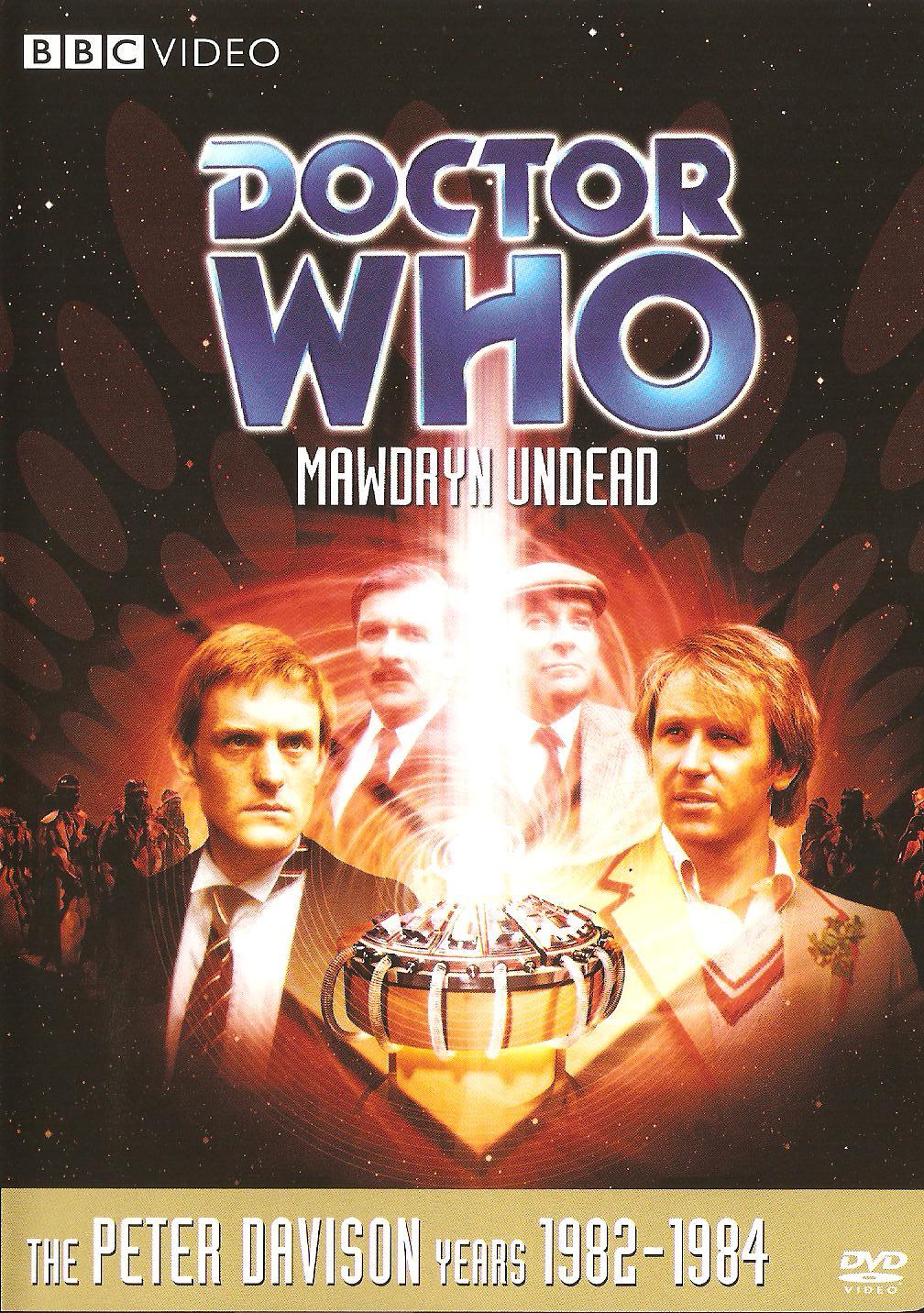
Doctor Who-The Mawdryn Undead
                     As presented in the Key To Time series with Tom Baker in the 1978-early 1979 the Guardians were shown to be fascinating characters that a lot could actually be done with. They were omnipotent entities,more powerful than the time lords and one of the few that the doctor would generally come to listen to and even be obedient towards if the circumstances required it. Anything in Doctor Who that adds to the fallible side of the doctors nature tended to make for some compelling story telling. Usually after events providing such a strong emotional plot as that of 'Snakedance',Doctor Who would tend to have a serial that was if not lighter at least quite a bit different. In this case they decided to forgo that concept in production to begin a rather epic series of stories dealing directly with the Black Guardian,a character largely left to the back round when the Guardians were first introduced. Considering the passing on of Adric in Season 19,this would also open the door for doctor to gain and new and unusual companion.

                  At a boys school in England,a student named Turlough is on the wrong side of an automobile accident and is promised his life will be saved and he will be returned to the planet of the original orgin,by the Black Guardian if he kills the doctor. The doctor for his part is returning to Earth with Tegan following her final experience with the Mara. Instead they find themselves forced into materializing on a luxorious spaceship that almost crashed into the TARDIS. In the meantime,Turlough is shadowing the doctor at every turn which leads to the fifth doctor encountering his old friend Brigadier Lethbridge Stewart,now a math teacher at the boys school Turlough is attending,but the Brigadier for his part has no memory of the doctor. After refreshing that memory,the Brigadier having had a nervous breakdown six years before,he and the doctor return to his TARDIS to locate the missing Turlough. 

                   Finding it difficult to deal with doing the Black Guardians bidding,his moves become so erratic that Tegan and Nyssa try to rescue a man they think is the doctor. By this time the doctor is realizing the source of the Brigadiers nervous breakdown: a temporal paradox creating by the meeting of himself sometime in the past,deduced from the fact the brigadier of 1983 remembers meeting Tegan. Attempting to travel back to 1983,Tegan and Nyssa return with the TARDIS to 1977 where they meet the Brigadier of that time and ask for his help,unwittingly setting events into motion. In the end it turns out the man they believe is the doctor is an alien named Mardryn,from a group of criminals who stole time lord regenerative technology to extend their lives. It leaves them in a zonbified state where they are immortal but carry a virus that nearly does the same to Tegan and Nyssa when they attempt to leave in the TARDIS with the real doctor. Having been asked by Mawdryn to give up his last remaining regenerations to end their eternal misery he is forced to do so to save his companions. Before that happens the Brigadier from 1977 meets his future self,not only ending the eternal life of Mawdryn's people and saving Tegan and Nyssa from their virus but also restoring both brigadier to normal. In the confusion of returning both brigadiers to their proper time streams,Turlough remains on the TARDIS and asks to join the doctor.

            There key issue to this serial in every sense  is the misappropriation of time itself. Lethbridge Stewart,with his well intentioned but highly regimented thought process doesn't allow himself from either the past or present to fully grasp the concept of the time paradox that he himself is on the verge of creating. The two Brigadiers engage in nurmous near encounters with each other until they do meet and the result encounter has the exact effect it shouldn't have had. Mawdryn and his people,for their part,paid the ultimate price for their survivalist attitudes by having a doomed eternal life of great agony. Solid proof that the lack of understanding of one's greatest wish could very well be one's greatest undoing. As with many of the best Doctor Who serials,this brings up some fascinating moral questions. Also characters as well. Turlough for his part is the biggest puzzle. Himself somewhat the survivalist,he's an alien of some unknown origin here who is trapped living on Earth. And whether it be an allegiance to the black guardian or to the doctor,it's his youthful opportunism that is his motivating factor in his actions and not so much any moral motivation. One senses that the Doctor's motivations for taking him on as a companion is as much self protective as anything,considering Tegan and Nyssa's rightful skepticism of Turlough.